
What will you learn?
Service management concepts
The fundamental concepts of service management, including the definition of a service, its components, and its value to stakeholders.

Service Value System
A key framework that helps organizations create, deliver, and manage services. It includes elements like the Service Value Chain, guiding principles, and governance.

Four Dimensions of Service Management
Explores the four dimensions of service management, which are critical to the effective delivery of services: organizations and people, information and technology, partners and suppliers, and value streams and processes.

Guiding Principles
The seven guiding principles of ITIL 4, provide organizations with a mindset for adopting and adapting ITIL practices to their specific needs.

Service Value Chain
The Service Value Chain helps organizations create value by optimizing their activities and resources.

ITIL Practices
The ITIL 4 practices enable working methods in the context of the entire IT function and aligned to the business strategy, improving how services are developed and how users are supported

Continuous improvement
Emphasizes the importance of continual improvement, which is central to the ITIL framework. With a focus on how organizations can continuously adapt and improve their processes and services

Service Level Agreements (SLAs)
Understanding of how SLAs are used to define and manage service quality, and the role of service level management in this context.

Key Metrics and Key Performance Indicators
Discovery of the importance of defining and tracking metrics and KPIs to measure the performance and effectiveness of IT services.
What's New in
PRINCE2 7th Edition?
PRINCE2 7th Edition?
Become a better project manager
Mastering PRINCE2 will equip you with a powerful set of project management principles, practices, and processes. You'll acquire the skills you need to deliver success reliably and efficiently.
Boost your projects' success rate
PRINCE2 increases your project success rates. You will learn how to control project variables, identify risks, and mitigate them, ensuring projects are delivered on time, within scope and budget.
Never stop learning
The world is embracing a culture of continuous learning. With PRINCE2 you can join that revolution, constantly refining project management practices to enhance your skills and achieve even more.
Speak a common language
Effective communication requires a common language, and PRINCE2 provides one. Standardised project management practices help streamline your workflow and leverage the power of collaboration.
Discover How ITIL Shapes Today's Digital Landscape
Unlock opportunities with ITIL
An introduction to ITIL 4, the global framework for effective IT service management.
See how it supports career growth, drives organizational improvement, and helps align IT capabilities with business needs in today’s digital landscape.
Learn why ITIL expertise is essential for professionals seeking to enhance marketability and secure opportunities in the global job market.

Lorem Ipsum
Lorem Ipsum
How ITIL Drives Organizational Success
Unified service approach
Panasonic leveraged ITIL 4 to transition from a manufacturing-driven model to a customer-centric service provider. Through modular training and executive buy-in, the company established a unified service approach, enhancing agility, incident management, and overall service quality. Thousands of employees gained ITIL certifications, enabling a cultural shift toward continuous improvement and faster service delivery.
Read the case study
...Show more
Innovation and scalability
Spotify leveraged ITIL principles to refine its IT operations, fostering innovation and scalability. The framework enabled a seamless IT infrastructure that supported the company's rapid growth and commitment to delivering exceptional user experiences, setting a benchmark in IT excellence for tech companies.
Read the case study
Read the case study
...Show more
Better Public Services through ITIL
The City of Pittsburgh implemented ITIL to enhance IT support and service quality across municipal operations. This initiative improved service reliability, boosted efficiency, and delivered better outcomes for residents, demonstrating ITIL's potential in public service environments.
Read the case study
Read the case study
...Show more
Structured ITIL Change Management
With ITIL 4, Fondaction stabilized IT operations, reducing recurring incidents and improving service quality. By implementing structured change management and governance, the organization enhanced efficiency, improved onboarding, and positioned IT as a strategic business enabler. Employee training fostered a culture of continuous improvement, ensuring sustainable growth and better customer experiences.
Read the case study
Read the case study
...Show more
Revolutionizing IT service delivery
By implementing ITIL 4, Touro University revolutionized its IT service delivery. The framework helped align IT services with institutional goals, optimize processes, and improve responsiveness. This transformation resulted in a more reliable IT environment, supporting the university's mission of excellence in education.
Read the case study
Read the case study
...Show more
Less incidents, more business growth
Hewlett Packard Enterprise (HPE) adopted ITIL 4 to enhance service management, reducing major incidents by 50% and overall incident volume by 40%. Standardized processes, automation, and ITIL-based best practices improved operational efficiency, customer satisfaction, and service reliability. Continuous ITIL training and structured governance transformed IT operations, ensuring sustained excellence and business growth.
Read the case study
Read the case study
...Show more


Meet our ambassadors
Three of our ambassadors share their career journeys and the impact of achieving PeopleCert certifications.
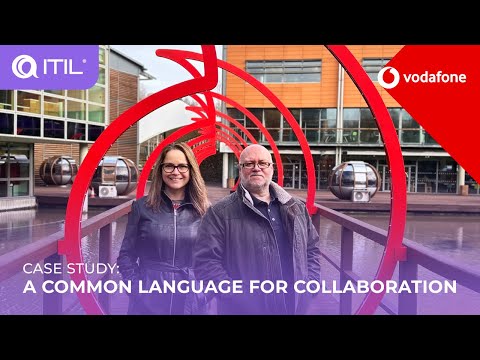
Meet David Barrow
A common Language for collaboration

Meet Richard Browning
Service Management Consultant, ITIL Ambassador and ITIL Master
ITIL
Case Study
The fundamental concepts of service management, including the definition of a service, its components, and its value to stakeholders.